Showing posts with label logistic E-Track. Show all posts

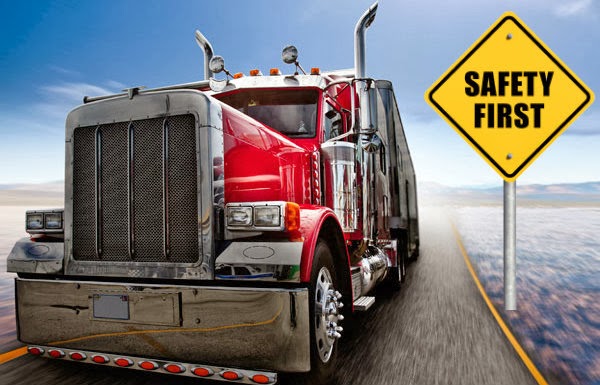
How Safety Equipment Will Save You Money on Insurance

on November 04, 2013


Everybody knows that insurance policies are based upon your personal possibilities for, well, failure. 

Perhaps it isn’t your fault. Handicapped, or at the highs and lows of age can affect eligibility for a cheaper plan. However, whether to choose to insure or not is never (and should never be) the question. It is how. How do I save my well-earned trucking bucks, without ‘wasting’ too much on a process that I may never and hopefully will never need to make use of?

Well, other than factors beyond your control, such as age or disability as mentioned above, there are factors so within your reach that to neglect taking advantage of their glaring opportunity’s presentation is reason for banging one’s head against the wall in regret.

Say if you are not one prone to accidents. Your sleeping patterns are religious and give you enough shut-eye to clock in good road time, but never allowing for a desire to close your eyes during trip. You follow direction with ease, and know your routes confidently. You’ve never run a red light and respect the other truckers and motorists on the road beside you. You’ve got a good general background that you can be proud of.

There’s just one problem. But it isn’t minor. Your straps were out of date one time. A winch was broken another. You got caught at inspection and points went up on your record to your detriment and disappointment. But more than that, whether caught or not, the danger this imposes to you is a great one, and just one accident due to failure to properly secure your load is (if not fatal) an exorbitant rise in your insurance fees and a monthly bill to remind you of the harsh reality.

The company you work for will send you a warning and give you three to days to call in and appeal. If you’re lucky, they’ll be more personable and tell you that you’ve got time to improve.
So here’s how to avoid your insurance fees rising the easy way:


1. Simply- Monitor your speed. Are you zooming it up when no cops are in sight and you want to deliver a load more quickly, you’re excited to get home, or simply taking advantage of the fact that it seems you are the only vehicle on the road? Here’s our advice: DON’T. The amount of time and money you waste if you DO get caught is worse than the alternative of patience exercised. And NOT getting caught…but crashing? Well, you tell me. How much time, and money are you saving then?

 2. Load safe. It’s quite basic. Learn your safe loading rules and regulations until you can recite them like a pro. Hey, it can’t hurt. Oh, and preaching is worth nothing without practice. Keep those straps tightened right. Make sure your chains and tracks aren’t rusted or cracked. Get tarped in difficult weather. Be prepared for anything! Even in the event of an accident that was not your fault, your load will not contribute to the injuries by shifting unevenly or falling loose.

3. Pay close attention to signs. One number interpreted wrong and your truck goes under a bridge that is half its size. That’s the end of your truck, perhaps your career, and hopefully not but likely your life as well. 


Foreign Trucking Danger Exaggerated by Authorities

on October 28, 2013


Language can sometimes be a barrier if the one you speak most is not shared with the country you live, and truck in.


The sign that tells you the upcoming bridge will slice off the top of your truck, the sign that lets you know you’ve entered Boise, Idaho, the sign that warns you from trespassing, in fact, every sign, is in English. If you’re lucky, some signs are number or picture oriented, and others have words but translation as well, not necessarily in your language though.

Then there are directions. Your dispatcher has probably explained your route and loading details in his main language, and if it isn’t yours, you can either understand or find a translator, or, it seems- just have a nice (confused) day.

Well, say it’s a good day for you, and your dispatcher explained things in your native tongue. The signs you pass are mostly either basic enough, numbered, or translated.

But then you must go through inspection. You’ve got to fill out forms, and answer questions.
Some of the questions seem too complicated, you get flustered, and too nervous to show any weaknesses to the officer for fear that he will classify you as unfit and unsafe to maneuver the roads as a non-fluent English speaker.

Since 1936, FMCSA and its predecessors have interpreted the rule (Section 391(b)(2) of 49 Code of Federal Regulations) that an ‘Interstate driver must be able to read and speak the English language sufficiently to converse with the general public, to understand highway traffic signs and signals in the English language, to respond to official inquiries, and to make entries on reports and records,’ to mean a required amount of a minimal level of English fluency to drive a commercial vehicle in interstate commerce.

Being that it is only minimally required, states administer CDL examination in foreign languages without fear for compromised safety. No studies or statistics have shown a connection between greater language fluency and fewer accidents. That’s why it’s unfair for inspectors to enforce subjective standards in the name of safety.

Due to the gray area, of what classifies as ‘insufficient’ in the language or not, inspectors in some states have taken advantage of this vague interpretation and cited perfectly fit drivers as unfit.

‘It should be up to the Motor Carriers to determine fluency during the hiring process, and states can continue to govern language requirements on their commercial driver exams.’ Most proclaim.

“People are missing out on the real safety issues at large and it’s a pity to concentrate on something that has no evidence of danger to our people. In fact it threatens the unemployment rate, and it threatens businesses in need of truckers, when hard working foreign truckers are sufficient but pulled out for exaggerated reasons!” Says Eien McBire, a 3rth generation trucker, 2 of whom, he says, were from out-of-country.

“My grandpa Frank and grandpa Lenny were both truckers, and yet they were not from round these parts. The right people need to be trusted more.”

So what are the real issues that need be concentrated on?

“Common sense, and statistically proved safety measures.” Says McBire.

“That means that if people are simply speeding, loading neglectfully, using old securing material, not using the proper straps or chains, ignoring red lights when they think they can get away with it- they are putting everyone else in danger including themselves and their loads. That needs more concentration. Stop looking at your foreign neighbor down the road for accusations. Look inside your own van for freight safety checkups, and at your own mile meter. That’s an easy way to change the world one truck at a time, right there.”


Breaking Stereotypes and Generational Prejudices in the Trucker’s world

on October 02, 2013


In everything, there are young participants and older ones. Some believe that experience and knowledge goes hand in hand with higher age and that more technically savvy and energetic dispositions give the youngsters their upper hand.

This rings especially true for the trucker. The older one looks down at a newbie with scorn at his unfounded arrogance and ignorance, and the younger one laughs him off with a strong arm and a flashy GPS. 


Josef Timpen, 65, with 32 years in trucking experience, says it makes him sad that the ambiance of camaraderie among truckers has gotten lost over the years to a replacement of confused newbies that don’t want to swallow their pride and ask, alongside older drivers that are disgusted by the pompous attitude and simply develop their own attitude in response.

Rather poetical, he had this to say:

“When you used to see another Trucker, it was like you saw another part of the tribe, of the family. You borrowed lighters, oil testers, gasoline bottles. You munched on toothpicks and sat on rocks in the wee hours by the gas station corner. You exchanged stories, peoples ears were open, their mouths flapping about interesting and practical stories, everyone learned whatever he could from the other. We helped each other connect batteries and rearrange loads. People gave away extra ratchet straps when another guy’s load needed a tighter hug. Coffee from one guy filled many mugs and lots of raspy throats that reeked of pulling an all-nighter in road-time and concentrated nicotine. The atmosphere was one where each person offered what he could and every gathering, each time with different sets of drivers, was one with a cozy feel and an open mind.’

‘Unfortunately nowadays that same community exists, but the soul of it: the togetherness, is gone. A guy needs help backing up and he puffs up his feathers and won’t stoop to ask. Truckers run by without so much as an offer to help. Truck stops are filled with young guys browsing their smartphones without eye contact whenever possible. It’s an each man for himself attitude. Everyone brings their own sandwich, you either change your tire alone or you pay the guy at the shop to do it. Of course, there are the exceptions. But not enough of them. I want the climate of companionship back in the game. Who’s with me?”

I think we all are, Joe. But someone needs to be the first one to break the spell. Here are some tips to get Joe’s movement going:


1: If you’re an old timer, and maps are your choice of navigation, instead of mocking the younger dude who is directionally illiterate without his GPS, coach him a bit in the art of mapping. Explain to him why when the batteries of your devices die, you can always rely on a good old-fashioned paper. Try to be open as well and compliment his tech adeptness
when he picks up his GPS and tells you how well he can operate the thing. Newbies: Put down your iPad and GPS for just a moment. Putting aside your pride for now and drink in the information. It will save you later when you want to get rid of the newbie title and consider yourself knowledge equipped. Nobody who only learned from his own mistakes and no one else’s went very far.

2. If you see a trucker struggling on the side of the road, flatbed, tanker, van, or whatever, pull over. The guy could use your help. Ask him his name; offer him a hand, a mint candy. Even if he blows you off, you know you’ve done your part. When his guilty conscience catches up with him later, you’ll be gone. But your good deed remains. Best case scenario though, you’ve made a new friend.  Trust us; those come in handy when you’re the one on the side of the road, a week later.


3. If you’re confused about something, don’t be afraid to ask. Older than you, younger and less experienced, it doesn’t matter. Simply being turned to for advice lifts someone’s spirit and makes him or her feel useful and important. Just because the guy who just emerged from CDL School has only been on the road for a couple months and doesn’t have as many experiences as you, he still has a DIFFERENT collection of experiences, and it may be worthwhile to hear about what he learned from the mistakes he made that you haven’t.

4. Talk about everything. Share your story. Even if it’s about that time you got yourself out of a rut like a hero, someone may have had a similar experience and have had a quicker solution that will prove useful to you later on. Discuss this topic too. Join the movement to break open walls of defense. Be open and honest. Let them know: you want to learn, you want to share what you know, whatever the age difference.

5. Remember, everyone was a driver-in-training once upon a time. I don’t care if your three uncles, your father and grandfather, your brother, and your best friend are drivers. It’s also very nice that you had a toy truck since you were three and knew you wanted to be a trucker since the age of seven. It’s wonderful that you were the go-to when dad needed help changing the oil or tying down on the cargo safely. But you once knew much less than you do now, so respect the ones starting off, because once upon a time, you were there too, empathize.

Getting the Most Truck for your Buck

on September 16, 2013

More than 70 Truck companies are USA manufactured, while about 50 are Asian based. Europe devours both with almost 200 trucking manufacturers to speak of, a majority from the UK, with a handful from Germany. 17 Companies root in South America, while a close 10 are concentrated in the area of Oceania and 4 from Africa alone.


Isuzu, originating from Japan, ranks at a top-seller in the trucking market. Daimler, hauling from Germany ranks even higher – topping some odd 100 billion in annual revenue. Volvo, from Sweden, collects about 300 billion every year. When it comes to income for Toyota, were talking trillions…
The Japanese billion dollar company, TATA, comes in closely, as does the German Volkswagen, Italian based FIAT, Japanese (again) and then the Chinese DongFeng following in at 10th largest manufacturer worldwide.

Okay, so what?


Well, when choosing the truck that is right for you, whether its a Freightliner, Peterbilt, Kenworth, or Vovlo, spending a fortune can sometimes seem like the only choice if a quality purchase is hoped for. Here are some ways to get the most truck for your buck:

1.       Spending the initial $6,000 for those grueling months at Trucking academy can make you skeptical. But once you know that a trucking lifestyle is cut for you, don’t turn back until you win your degree. Also, scholarships are a available, just do the research and fill out a form. After, if you've decided to do something else for a living, having a CDL license in your pocket is nothing to cough at, and at any desperate point in your life, you can always turn to trucking as an immediate, big profit option. Besides, both large and small trucking companies are always hiring, there is no shortage of job potential for the Trucker.

2.       Once you've built yourself up with a couple of green bills, don’t get too ahead of yourself. We know that having your own truck will make you more money in the long run, and it’s a great investment. But can you really afford it now? Also, it’s good to have as much experience as possible in your knowledge bank before you buy the used ones that have been tinkered with to look like new…but aren't. Remember, trucks are always being sold for a REASON. Find out that reason, innocent or not, before anything else.


3.       Okay, so now you've been maneuvering a tanker, or a flatbed, or an interior van, or whatever, for a couple years. You know the rote. You can strap in a light wheeler in 20 minutes flat. You adjust your chains like a pro. Regular ratchet tightening has been a good workout. You've seen the country, you felt like you've seen the world…great. Now check your bank, have you been saving as much as you can? If you have, you’re ready for the next step.

4.       Time to go truck-shopping. You’re at the next level in your career, ready to make the big money. Now, along with big money, always comes more worries, and more expenses. Calculate if it is worth it for you. For your first time around, invest in a truck that will do the job, if it needs a paint job, so be it. If you've really saved up until now, you may be able to get a good deal on one of the big brands, which means more quality and more quantity for you.


5.       DON’T purchase a truck only based on its appearance. An artist decorating the outside does not always mean a great makeup from the inside, the part that counts the most. Although, DO take its appearance into consideration because at the end of the day, it is YOU that has to haul it around 50 states rain or shine, dark and muggy or bright and sunny. It is you who will get that feeling of pride when you drive up to your truck stop or down the highway carrying out the job that the world relies on you for in your shiny toy. And this my friend, should motivate you, to keep on trucking.


The ABC's of Trucking Partnership

on September 03, 2013


A driving partner can be a joy or a challenge. It is more of a combination actually. The balance of it leaning more towards being an asset or a burden is where you win/lose.
Here are some must have tips for sustaining a fair partnership in the trucking world.


CONTRACT:

Be sure that the finances are decided before hitting the road. Put it down in writing. No matter how friendly you are with them right now, any misunderstandings may cause later flare-ups that can be easily avoided.


EQUALITY:

Split the pot evenly. If you are getting 25% and him the other 75%, it might be fair, if that’s the work load and spending percentages you each provide.
If it is difficult to keep track, sharing a gas account card and depositing the right amounts individually in the interim can save lots of time on calculations.


SPOUSAL:

If you are working with your spouse, combine all the money into one account, and then decide on how much can be used for each. Allotted necessities and extras for each should be a leveled amount for each month, keeping the rest for savings will keep the money in your pocket and the worry off your heart.


EQUIPMENT:

Having the right safe-loading material is crucial, and quality combined with affordability is rare. Dccargomall.com offers both and can save you and your partner from a monetary mess or a loose load.


COMPROMISE:

Are you uniquely better off closing your eyes in the daylight? Take the night driving responsibilities upon yourself for the most part, and catch the shuteye when you need it.

Are you too cold or too hot? Try to give up on your weather preference for whoever is driving at the moment. The comfortability of the driver is priority, and ultimately to your advantage in safe-terms.   
Are you better at carrying heavy loads, but your partner knows more about safe loading? You can lift, and he can lug. Have him coach you and don’t puff up your peacock feathers. The more you learn, the more you’ll know. Haughtiness only keeps the rookie in rookie-land.

Is he more knowledgeable with direction, do you better communication skills? Take advantage of each others strong points and utilize them to the utmost! Let him hold the GPS, let yourself do the negotiations.


PAMPERING:

Are you sometimes wishing you could both use the sleeper at the same time? Throw in an extra sleeping bag, it’s worth it. Waking up refreshed will fizzle out your suspicions on that one.


HONESTY:

Keep an open and honest policy. Sometimes a true slap is better than a false hug. No slapping, please, but really letting your partner know how you felt about something, in an approachable manner, can do wonders. Holding it in and putting up a smiley front might only leave you burning inside and it is only a matter of time before you explode.

Don't make light, or belittle each others duties, your both dealing with some heavy duty material, and costly assignments.

Share a cookie, share a joke, and make light of your load. Because a burden shared, is a burden halved, and a happiness shared, is a happiness doubled. 


shouldn't be volgur.