Showing posts with label flatbed. Show all posts

Top Ten Overheating Prevention Steps for the Trucker

on March 11, 2014


Not only is it worth your truck's time to receive constant inspection for keeping cool, but it's worth your own time and money as well. Don't wait until parts are cracked and leaks are emerging. Catch your truck red handed before it sizzles up beyond repair.


Know if your truck is prone to overheating
Some trucks are more susceptible than others to heat; familiarize yourself with your truck’s vulnerabilities. 

Is it equipped with a less-than-ideally designed head gasket? Is your engine built with other priorities in mind? A larger engine doesn’t necessarily mean more heat resistance. Is there an old warrantee? If so, take that sucker in for a repair.


Monitor Your Gauges
There are multiple ways that your truck will actually inform
you of its current condition so that things like overheating can be caught before the actual overheating takes place. Few people actually check their temperature gauges on a regular basis and it’s a great habit to start.
 
The fuel gauge, speedometer, and tachometer are a norm for daily checks but don’t limit yourself to those gauges alone. Engine Oil pressure readings (found next to your temperature gauge) the battery charge indicator, and even the boost and vacuum gauge are all handy for keeping up-to-date with the needs of your vehicle.

To nip a failing or overheating engine in the bud, ensure that each time during your consistent gauge checks turns up with fairly stable and balanced ranges. Any rapid changes should set off warning bells. In your head that is. Repair alert!


Leaks
The guy in the car next to you motions that you roll down your window. He points to the bottom of your truck – you have a leak. Don’t ignore his warning, he deserves your thanks.

The coolant liquid – whether bright green, orange, red, or pink should not be hanging out outside the perimeters of the cooling system within your truck including the engine, transmission, brake system, transfer case, etc. If it is, you’re prone to running out of this magical liquid, and your cool-down rate is at risk. 

Don’t delay because the later you have it fixed, the more money will have to leak from your wallet. 


The Hood
Sometimes the leak is too small to notice but causes a great amount of damage to your engine. That’s why opening up your truck's insides is the next necessary step.
 
Open up that hood and dig around and check your hoses and lines for possible abrasion. Are your clamps holding snugly enough? Anything that is not up to par in shape can’t hurt to be replaced.

Ensure that your coolant is properly leveled and isn’t fluctuating in level drastically with each consistent check.


Hoses and Belts and Domino Affects
Belts and hoses are rubber, and therefore can crack, fray, leak, or rot. 

Check for these signs of wear, and check especially vigilantly for its level of tension. If the tension is off, the alternator will be forced to work harder than usual to transfer power to the other parts. This extra effort put in causes extra friction, and therefore, extra heat. Much like if you were to work extra hard at the gym and sweated it out, well, for hours.

Extra heat in the engine bay in turn raises the heat of the bay overall, which then elicits a result in the rise of your engine’s temperature. As this goes on, the heating continuously rises, and then 'bam', one day: overheated. An overheated engine leads to pressure building in the cooling system, and therefore put pressure on the hoses. 

If the cause of your rising temperatures is not obvious enough, explore the entire bay until you come across it. Remember though – before you start sniffing around a heated hood, give it some cool-off time.


Coolant-to-Water Balance
Filling up the cooling system with only water or coolant alone are both detrimental to the system. Both, at balanced levels are necessary for proper cooling operation. 50/50 is the general safe way to go, but check out your specific manual, there may be a different percentage befitting your specific system.


Although DCCargoMall.com carries all the right qualityand hefty equipment to keep even the largest loads into place, there are safetylimits and precautions that we suggest you follow if only for the fact that you are saving yourself money on overheating repairs! 

The connection between overloading and overheating? Due to all that extra weight, your engine is having to exert that much more effort to stay afloat, therefore generating more heat. It may be worth it to make that extra trip and split that load into two.

To find out what your truck’s limit is, check out your manufacturer’s weight limits and ratings from the owner manual or on a plate/decal inside the edge of your truck’s door frame.


Towing
Some trucks are tow trucks and others, well; you added a towing system to after buying. This towing addition, whether before or after, does not increase your truck’s load capacity in itself, and you will still need to abide by the loading capacity, as well as calculating the overall load weight put onto your truck, whether it’s on the trailer, roof, or otherwise.

If your towing setup is an addition made on your own, and your loads are frequently heavy-duty, it is highly suggested that you upgrade your radiator, coolant lines, and water pump to aid in dissipating extra heat. This way, whatever heavy load you do carry, (within limits range of course) will at least not be taxing on your cooling system.


Brakes
Various catalysts, such as a temperature fluctuation, a pressure rise or fall, an uneven wear of brake parts, and/or even improper braking techniques, are all ways to cause the already abrasive and high with friction brake calipers and pads to stick to the wheels. This will slow down the vehicle and in turn require extra blasts of energy – and heat – to function properly. The result? Overheating.

If you’re suspecting the dragging brake situation, get to your location if possible, and wait for cool-off time before you go prodding into the system, that is, only if you know what your doing.


Overall
Keep everything under your hood in ship-shape to avoid the overheating monster. 

Some main functions to check first would be your coolant hoses, hose clamps, radiator, engine belt, radiator cap, overflow container, cooling fan, and your engine’s thermostat, among others.

Keep cool and drive on.

What Can YOU Do to Prevent Accidents?

on February 12, 2014


Let's educate ourselves on accident prevention. 
Knowing the cause is half the cure.
The statistics for faulty loading accidents are too high. 

To bring down the number, ensure that your knowledge bank of safety tips, rules, and regulations are up to par. 

Remember, rules constantly change so be sure to keep updated. Having the proper safety equipment with guaranteed quality and longevity can save you from a load shifting, falling, flying, or blowing. DCCargoMall.com hopes to provide you with any powerful straps, hardy chains, sturdy winches, and much much more to be there for you when you take on this mission: keeping yourself, and ultimately, everyone around you, safe.

You Don't Want a Reason to be Caught by the DOT. Then again...

on January 29, 2014


You don't want a reason to be caught by the DOT. Then again, you don't want an oversight of hazardous truck practice.

New York’s comptroller has released a new audit, keeping us informed of the current dangers facing drivers on the road today.

They have stated that the New York state Department of Transportation has not been sufficiently monitoring commercial carriers to see whether they have been at roadside due to violations or due to repairs and/or corrections needed to the vehicle. 

This oversight deems the public at a preventable safety risk.

“Lax oversight of commercial carriers could be putting New York’s motorists in jeopardy,” State Comptroller Thomas P. DiNapoli said. “The [New York] Department of Transportation needs to do a better job making sure carriers comply with the law, and most especially those with poor safetyrecords. The state needs to send a strong message that commercial carriers that flout the rules and put people at risk will be penalized.”

The N.Y. DOT is behind the administering of state participation in these necessary roadside inspections of commercial vehicles, carried out by the Federal Motor Carrier Safety Assistance Program.

The requirements by Federal and State regulations are for Motor Carriers to return inspection reports and repair certifications to the N.Y. DOT within 15 days. The problem though, us that according to DiNapoli’s Auditors discovery, N.Y. DOT has not been monitoring whether carriers that have been cited submit the required certifications on time indicating that violations have been repaired or corrected.

An added point on the report reads that the N.Y. DOT has no tracking system installed to monitor this compliance with the 15-day requirement. In fact, there is a negligence of tracking whether these reports are being received at all.

Additionally, approximately 60% of the cases of repeat out-of-service reviewed, the N.Y. DOT did not use such “enhanced enforcement actions to ensure compliance with the law. Instead, violators in these instances typically received only a traffic citation.” Auditors have noted.

To resolve the predicament, the audit has suggested that the N.Y. DOT put several forms of action into place: 
  •    Institute a comprehensive tracking system to monitor carrier compliance with the requirements for certification that vehicles have been repaired.
  •     Develop strategies to improve carrier compliance, particularly for those with poor safety histories and out-of-service violations.
  •     Impose increasingly severe penalties, such as compliance reviews and formal violation notices, when carriers are found to have continued to operate out-of-service vehicles.
 
The N.Y. DOT generally agreed with DiNapoli’s recommendations and has indicated that steps are being taken to implement them. 

We can't just look to the DOT for safety implementation though, as active safety precautions begin with the driver and his truck.

To avoid safety hazards and not having a reason to report fault are simply to implement prevention by loading with quality tools such as thick enough straps, heavy-duty chains, new materials, and hole-free tarps. All that can be found in high quality and affordability at DCCargoMall.com.

For a copy of the report, including more details of the N.Y. DOT’s response, visit: http://www.osc.state.ny.us/audits/allaudits/093014/12s13.pdf

5 Crucial APPS for Smart-Phoning Truckers

on December 02, 2013


If you can’t beat ‘em, join ‘em.

That’s what’s been evolving in the trucker’s world and everyone else's world in these modern times, regarding smart phones that is. 

Texting while driving will always be a no-no but the critique of actually owning a smart phone has gone down from ‘Smart phones make stupid people’ to ‘Let’s use these Smart phones to wizen everyone up.’

In a recent survey by uShip, more than 6,000 owner-operators reported how they use their cell phones and mobile apps on the road:

* 57% use their phones more for daily business this year than they did last year.
* 37% use their phones to book loads, and 35% use them to bid on loads.
* 33% use mobile apps to monitor the weather, gas prices and traffic conditions.
* 20% no longer travel with a laptop.
* Nearly 20% use social networks such as Facebook and Twitter on their phones to keep up with family, friends and colleagues.


Clearly, mobile phones and tablet computers have already become a crucial part of life on the road for truckers. In fact, cell phones are so important to truckers that when asked what they'd be willing to give up to keep their phones, 20% said they would give up their CB radios, and sadly enough, 16% said they'd give up their spouses and 8% said they'd give up their pets. Now, that's dedication to a mobile device.

Here are 5 apps that will get you rolling in more convenient, money-saving and time-efficient ways:


Trucker Service
 
Professional truckers can utilize this app to find thousands of heavy-duty service locations across the country via listing their city, state, or current location. The service providers are listed by category, roadservice, repair shops, towing, OEM dealers, and more!


GasBuddy
 
This Diesel convenient app saves you accumulated money from gas guzzling causes. Find the cheapest diesel fill-up option in your area by joining this app’s community of dedicated informers, who provide up-to-date diesel prices, nearest stations, and gas station features across the U.S. and Canada. FuelDawg is another great app option for gas-saving.


Skype

Now this one’s a classic – if you don’t have Skype, get it, NOW. Being away from home is more often than not in the life of a trucker and seeing your wife/children/parent/friends faces in real time can make the long separation that much less painful. If you’re on different time zones, you can easily record a video message to brighten their day when they awake.


FatSecret Calorie Counter 

Being a trucker can make a healthy lifestyle close to impossible. Exercise? You’ve been sitting or lying down for the past 30 hours! Healthy food choices? From where, McDonalds or Burger King? It’s almost a joke. Aside from that first night of departure where you left with your wife’s heavenly home-baked goods, the rest of your food regimen is fast food, fast food, fast food. You can’t afford that extra hour of parking constraints and highway exits. So download this app and feel the relief from the first day. With it, instant nutritional information from foods found at most restaurants can be found, bar codes from nutritional info and packaged goods can be scanned, and total daily calories, fat, and carbs, can be tracked. Now that is a way to stay health-conscious and not waste your precious trucking time.


FleetSafer Mobile

The danger of texting while driving is an ever-present reality and while writing or reading just one text, a driver looks away from the road for an average of 4.6 seconds. That may seem trivial, but not until you discover that during that time, at 55 miles per hour, that trucker's vehicle will travel the length of an ENTIRE FOOTBALL FIELD. This app promotes prevention by eliminating the temptation to text back while driving. It simply allows you to automatically have texts and emails blocked while driving, and offers a robotic response to incoming texts and emails with an ‘I’m driving’ message. This app can literally save your LIFE.


Co-Pilot Live Truck

Use this voice-guided GPS navigation to give you safe and reliable routes that are convenient specifically for truckers, to help you avoid low-clearance and weight-restricted roads custom-calculated by the size, vehicle weight, and load type of your truck. You can also create custom route- profiles for easy switching between varying vehicles, view and plan efficient routing options, and help avoid out-of-route miles. What’s more is that your map can be downloaded for use offline, so driving anywhere without service will not interfere with your route directions.


* * *Bonus App!* * *
 

EasyCargo 


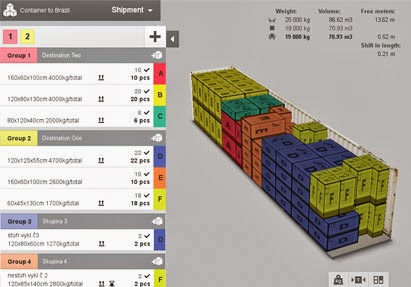
This app is not just an app, its a complex software that is easy to use and makes safe loading all the more easier. It will calculate a load-plan for you and save you space and time, essentially. The visualization is phenomenally clear and 3-D, and almost makes a tedious loading plan fun.


Little Tricks and Fixes for Truck Maintenance

on November 25, 2013


  • Bet you’ve never heard of this silly sounding piece of sound advice: We know it’s fun to stack up your key with a key-chain full of collectibles, mini truck models, Indian beads, fun quoted plaques, and more. Trust us though, keep it lightweight and simple. The less pressure you put on the key, the less pressure the key will put on your ignition. After years of sticking the same heavier-by-the-month key-chain collection into your ignition, can eventually wear out the tumblers inside and lead to ignition switch failure. It’s an accumulative process, so don’t let the simplicity of this trick fool you. Lightening the load of your key can add years of life to the ignition on your truck, especially with all the bumping on the road, adding weight to that already heavy key-chain.


  • Remember: Tires are the only thing between you and the road, and in losing even one, it’s automatic accident. Check to see if your tires need replacing often and replace them in advance to damaged conditions. Waiting longer for repair will hike up the bill at the mechanic. Use a gauge to determine that your tires have the proper pressure. To check that the tread has adequate depth, place a coin inside the groove with the top of the head up. If more than half of the head is visible, it’s time for a tire replacement.


  • Choose a mechanic you like and stick to it. When you go to the doctor, you likely keep the same one throughout as he carries a record file of your medical history and already knows your background, being able to make a quicker diagnosis and more accurately base his assumptions off of a larger knowledge bank. Similarly, whenever your truck needs repairs, going to the same guy can save you time in explanations and perhaps even a few bucks (if you’ve established a nice rapport with the guy!)

  • To prevent your truck from getting snatched up by greedy thieves, aside from the obvious tips like keeping doors locked, not leaving any spare keys in the car, removing valuables before exiting, and installing alarms, here are some things to know: keep your truck looking tip-top, thieves will actually view a rustic or abandoned vehicle as an easier target. They will assume you may have neglected to lock doors or attend to it closely, and view it as one that will bring payment in straight up cash, and will go for those first.

  • The second tip in preventing truck thievery is to put up as many obstacles as possible: even if he can chop through each and every one of them, this might make him hesitate to choose your truck as a target, or even if he does, will stall you for time to catch him even red-handed, coupling with timely police arrival following your numerous alarms. The more of the following that you choose to install, the better: An ignition cut out switch, fuel cut out switch, steering wheel lock, transmission lock, wheel lock/boot, lockable fuel cap and wheel nuts (fuel and wheels are frequently stolen) and a VISIBLE vehicle alarm system to scare him off.

  • Last but not least, when loading that truck of yours, ensure that any straps that are even a little lose and tightened and any load locks etc. are in a complete lock hold. Any items that shift during your ride will not only serve as a safety hazard, or earn you points that you don’t want, but will cause abrasion to your truck, and lose out on potentially long-term longevity. Load safe!
shouldn't be volgur.